by Lena Danz and Lidia Gaspara Salvador
Even in our native language, interviews can be unpredictable. From formulating the right questions to building a good relationship with the interviewee to being able to react quickly, interviews require a combination of preparation, intuition, and self-confidence. Now imagine doing all of that in a foreign language. In academic fields such as Japanese studies, there are few opportunities to put these skills into practice, which makes it all the more exciting when such opportunities arise. We would like to take you on a journey and not only tell you about the interesting conversation we had with a Japanese student from Seikei University, but also give you insights into the planning and execution of our first interview in our third language, Japanese.
Balancing student life, club activities and work: A portrait of a 19-year-old student’s food practices
Our interview partner was a 19-year-old female student from Tokyo, who studies at Seikei University and lives with her parents, as is common among young Japanese. Commuting between home and university takes her about two hours each day. In addition to her studies, she’s an active member of the university’s tennis club, which meets twice a week, and works up to 15 hours weekly at a tutoring school. The student herself is not particularly interested in cooking and only prepares meals occasionally, as her mother is usually responsible for cooking at home.
Copyright © Cornelia Reiher 2024
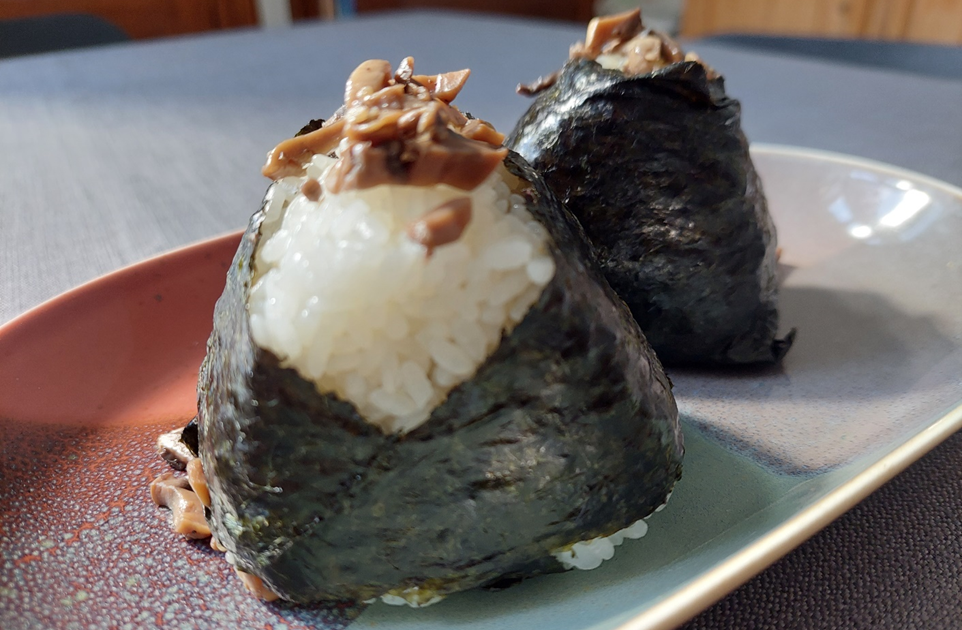
At university, she usually buys food from the university’s convenience stores for breakfast and lunch, since the cafeteria is often too crowded. She usually opts for onigiri, Japanese rice balls shaped into triangles with various fillings wrapped in nori (seaweed), and karaage, deep-fried meat (usually chicken), vegetables, or fish coated in a fine batter. Although she sometimes brings home-cooked meals, these are usually prepared by her mother. At university, she eats with her classmates in the classroom and has dinner with her family at home. This is a common pattern for young people in Japan, as we have both noticed while spending time studying there.
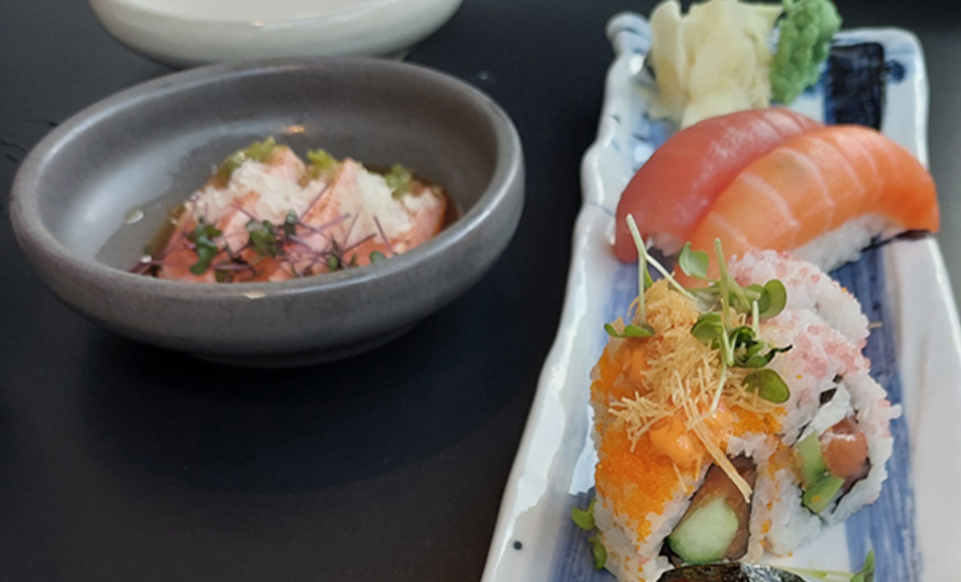
Her favorite food is sushi, especially salmon and buri (sushi with Japanese yellowtail). Although she prefers Japanese cuisine, she also enjoys affordable Italian dishes at restaurants such as Saizeriya, which offers localized versions of Italian dishes. After tennis practice, she often goes out to eat with her club mates, her favorite restaurant being one that serves omurice (rice with creamy omelet, topped with ketchup). Although she finds eating out more expensive than cooking at home, she still does so quite often. As for alternative diets such as vegetarianism or veganism, she is aware of them, but they do not play a role in her everyday life. When asked, she recalls seeing plant-based milk alternatives at Starbucks, but has not noticed any vegan dishes in typical Japanese restaurants. We experienced this during our time in Japan as well—vegan options were rare, and it was often a challenge when vegan friends from Germany came to visit. It was interesting to see how different our perceptions are: as Europeans, we immediately notice the lack of such options, while she herself doesn’t pay attention to it.
Copyright © Cornelia Reiher 2024
Healthy eating is important to her, particularly consuming enough vegetables. Her favorite ingredients are miso and dashi, both staples of Japanese cooking. She has little experience with international versions of Japanese food, having only traveled abroad once for two weeks to London. While she saw Japanese food there in shopping malls, she didn’t try it. However, she’s open to exploring such variations in the future.
The interviewer’s perspective
Conducting an interview is always challenging, but doing so in a foreign language adds a whole new
layer of challenge. For our interview, we opted for a semi-structured format. This meant walking a fine line between preparing enough questions to guide the conversation and not overwhelming our interviewee or turning it into an interrogation. Our goal was to create a relaxed, open atmosphere in which genuine dialogue could take place. Preparing the questions was a process in its own right. We started with questions in either German or English, which we then translated into Japanese. Although translation tools can be useful for an initial draft, they often fail to capture cultural nuances. Concepts that are familiar to us might not translate well or be widely understood in Japan. We also had to research topic-specific vocabulary and terms that might seem obvious in our context, but which could require an explanation in another culture. A large part of the preparation involved reflecting on our own perspective. Being aware of our Eurocentric lens helped us reframe questions. In this regard, working as a group was an advantage. We could compare notes, help each other identify potential issues and give each other honest feedback.
In the interview, Lidia took on the role of the interviewer. Of course, no matter how well you prepare, interviews have their own rhythm. Even as an open, communicative person, interviewing a stranger presents unexpected challenges. You might have a rough plan for how the conversation should go, but it’s important to stay flexible. Asking too many follow-up questions for example can unintentionally shut down a shy or reserved interviewee. Rather than drawing them out, it could cause them to retreat further. In our case, time turned out to be one of the key ingredients for a successful conversation. We conducted the interview online, which came with its own set of challenges. Technical hiccups caused delays and made it difficult to maintain a natural rhythm for the conversation. On top of that, our interviewee was sitting in a virtual room with three unfamiliar faces, which understandably made her a bit cautious at first. Her early responses were polite but brief, and it took some effort to move beyond surface-level answers.
To help her feel more at ease, Lidia tried to lighten the mood with a few jokes and shared some of my own experiences from Japan. That small shift in tone made a big difference. Slowly but surely, she began to open up, offering more thoughtful insights and speaking more freely. It reminded us that interviews are just as much about building trust as they are about asking the right questions. Sometimes, it’s those unscripted, human moments that truly bring a conversation to life.
The notetaker’s perspective
Taking notes during our interview with the student was both challenging and rewarding. As the designated note-taker, Lena focused on capturing the details of the answers while also observing how the conversation unfolded. At first, our interviewee seemed shy and gave very short responses, which made it harder to take notes. But as the interview progressed, she relaxed noticeably, especially thanks to Lidia’s friendly way of asking questions and sharing her own experiences. Lena was surprised how much our interviewee’s eating habits are shaped by her family and convenience culture in Japan. She rarely cooks for herself, as her mother prepares most meals at home. When she does eat outside, it’s usually at convenience stores near her university. Through her responses, Lena also got a clear picture of her busy life: she works part-time at a cram school and spends about an hour commuting to university each way. This helped Lena understand why convenience food plays such a big role for her.
Overall, writing notes helped Lena stay fully engaged and reflect on our interviewee’s answers in real time. It was fascinating to get such a personal glimpse into the daily life of a Japanese student. The interview also made us realize how much our cultural backgrounds influence how we think about food and health. Despite our differences, her openness and curiosity at the end made the conversation feel warm and genuine.
Lena Danz is a a student in the Master program Global East Asia at Freie Universität Berlin. Lidia Salvador is a student in the Master program Japanese Studies at Freie Universität Berlin.