by Athanasios Samaras
As part of an ethnographic exploration, we embarked on a culinary journey through the area surrounding Berlin’s Kantstraße, a street well known for its high concentration of Asian restaurants. Our aim was to observe how Japanese eateries in Berlin present Japanese food culture and to understand how these places attract visitors.
Copyright © Athanasios Samaras 2025
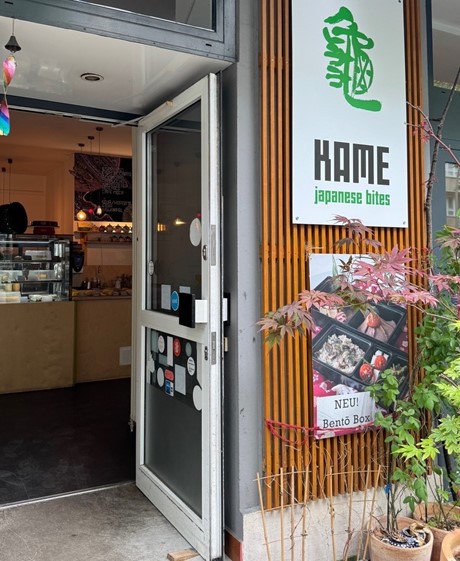
Our route began at KAME Japanese Bites on Leibnizstraße. This small café offered a calm and modest atmosphere and featured a counter filled with typical Japanese dishes such as onigiri, karaage, Japanese cakes, and melonpan. These treats could be enjoyed at small tables on site or taken away. Communication initially took place in Japanese but quickly shifted to English once it became clear that our group was not fluent in Japanese. The combination of language, presentation, and the exclusively Japanese staff gave the small, charming shop a sense of authenticity. Tucked away on a quieter side street, the café also invited guests to sit outside and observe the passersby.
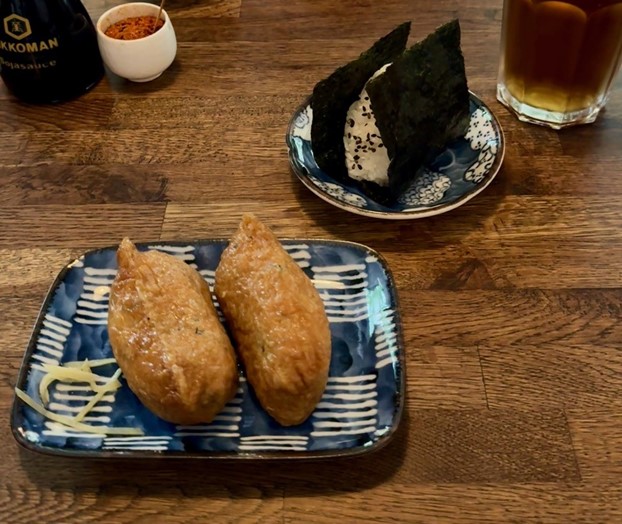
At Heno Heno, we experienced a different form of closeness. The small restaurant resembled a Japanese-style cafeteria, offering simple dishes such as gyudon, soba, and inari sushi. What stood out was how some meals had been subtly altered, for instance soba with spinach or clearly labeled vegetarian options. These adaptations reflected how Japanese cuisine has merged with Berlin’s food preferences, a process that the owners appear to have embraced in adjusting their menu to local needs.
Copyright © Athanasios Samaras 2025
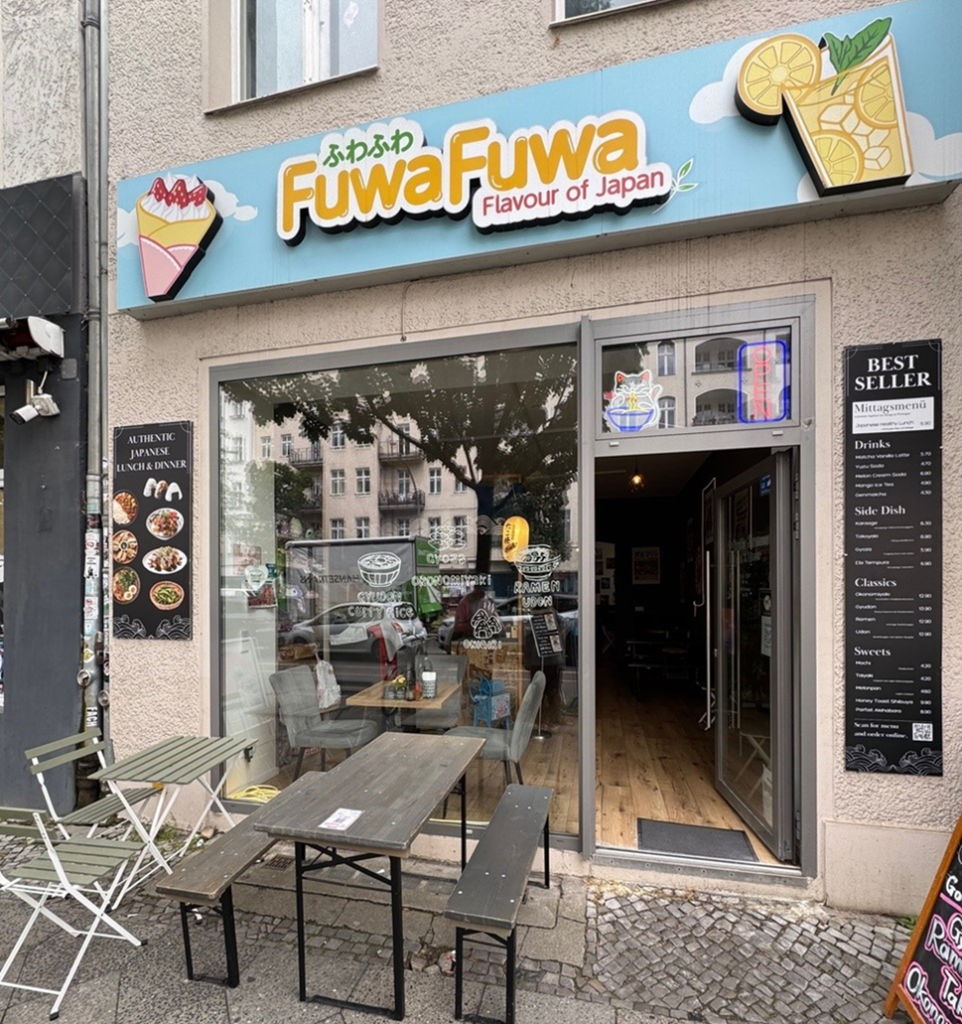
A particularly noticeable example of the connection between gastronomy and migrant communities could be seen at Fuwa Fuwa. The interior was filled with Japanese elements, including lo-fi music, posters of Japanese landscapes, and staff speaking Japanese. Especially striking was a flyer for a Japanese massage therapist displayed on the counter, a small but meaningful sign of the close bonds within the Japanese community in Berlin. Customers are encouraged to place orders through a website using a QR code and to pay digitally. Although an English version of the menu exists, many instructions are displayed in German. The intended audience seems to be younger and tech savvy.
Copyright © Athanasios Samaras 2025
Separately from the group, I also visited Kuchi, a restaurant with a unique background. Founded in 1999 by the renowned restaurateur The Duc Ngo, it combines the traditional izakaya concept with a modern and urban aesthetic. The dark wood interior, the open bar, and the elegant design create an atmosphere clearly inspired by Japanese visual language, without appearing cliché but rather radiating genuine authenticity. The menu is diverse, going beyond classic dishes to include creative reinterpretations. What I found particularly fascinating was how flavor, quality, and a creative approach to tradition come together here. Kuchi offers takeaway and delivery options, another example of how flexibly Japanese cuisine is represented in Berlin.
Overall, our route showed just how diverse Japanese gastronomy in Berlin is and how these spaces can contribute to building social connections. Japanese restaurants are often busy, not only with tourists but also with locals. For many Japanese students who may have chosen Berlin precisely because of its cultural diversity, these eateries can be not only places of authentic enjoyment, but also spaces where familiar culture can be revisited. At the same time, they demonstrate how cultural boundaries can soften through shared meals, without completely erasing the original identity, even if not all of these places are run by Japanese owners or staff. It is precisely this unique combination of authentic taste, cultural familiarity, and everyday integration that makes Kantstraße number one when it comes to experiencing Japanese food culture in Berlin.
Athanasios Samaras is a student in the BA program Japanese Studies at Freie Universität Berlin.