by Isabell Frank and Nils Ohnesorge
Thanks to an online exchange between Seikei University and Freie Universität Berlin, we had the opportunity to ask Japanese students about their daily eating habits and their perception of Western cuisine. Isabell and our classmate Julia had the pleasure of interviewing Akari*, a student at Seikei University, about her eating habits, her experiences abroad, and Japanese perceptions of Western cuisine. The interview was conducted via Zoom. Since Akari speaks English almost like a native speaker, they decided to conduct most of the interview in English.
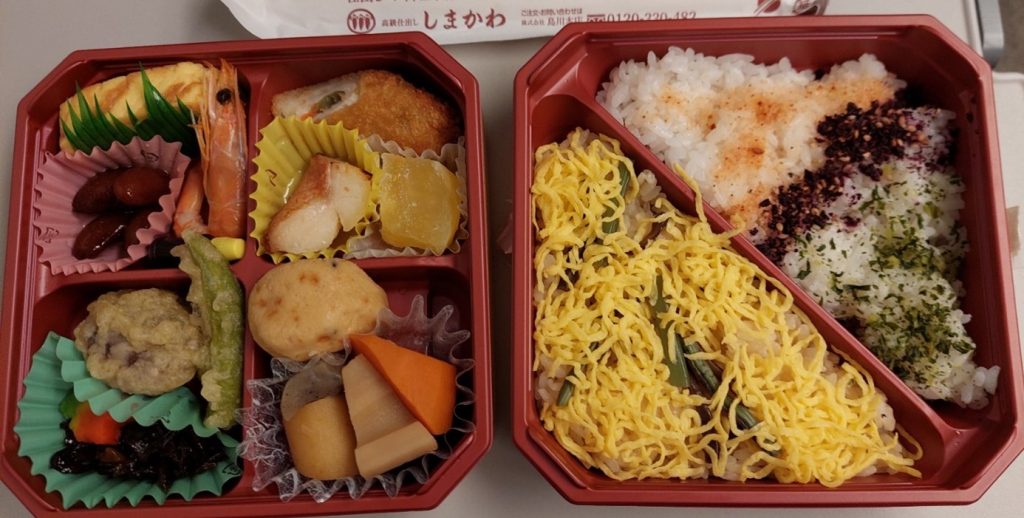
Akari leads a life that is quite unusual for Japan. Due to her parents‘ work, she lived in Singapore and India for about seven years before returning to Japan at the age of eleven. Attending an international kindergarten and elementary school is reflected in her exceptional English skills. Surprisingly, her mother was able to cook Japanese food for her even while they were abroad, as there were Japanese supermarkets there that sold the necessary ingredients. As for daily meals, Akari’s mother cooks her dinner, which usually consists of Japanese, Chinese, or Italian cuisine. For lunch, she either eats a homemade bentō (lunch box), eats at the university cafeteria, or buys her lunch at a konbini (convenience store). She is quite picky about vegetables, but she tries her best to eat them because she doesn’t want to waste food. She considers this a trait of Japanese people. The food she cannot live without is Japanese rice, but since the price has doubled in the last year, she cannot eat it as often as she would like. When asked what image Japanese people have of German cuisine, she jokingly admits that it mainly revolves around beer and sausages. Akari also mentioned that some foreign cuisines, such as French cuisine, are considered luxurious and are only eaten on special occasions. Many young Japanese girls like Korean and Italian cuisine and choose restaurants based on their aesthetics, as they want to post photos of their visit on Instagram.
Copyright © Cornelia Reiher 2022
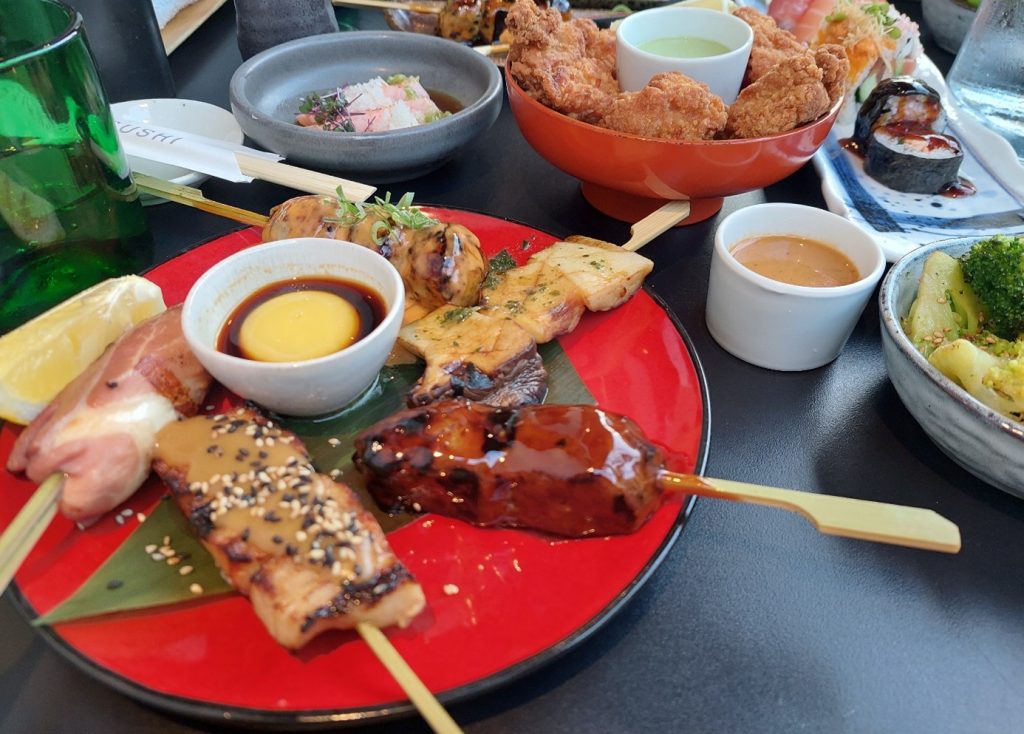
Nils and his classmate Mohammad conducted another interview with Keisuke.* We agreed to conduct the interview in English. Keisuke did very well. In the beginning, we were perhaps a little shy and awkward, but quickly warmed up and both sides enjoyed the relaxed conversation. We talked about the globalization of different cuisines, and Keisuke shared his experiences traveling abroad and sharing meals with international friends. Seikei University hosts cultural exchange events like international food parties, where Keisuke tried and liked sweets from the Philippines. He also mentioned that one can find any kind of cuisine in Tokyo. He told us that his Chinese friends preferred Chinese cuisine in Japan. When he travelled to Europe, Keisuke noticed that Japanese restaurants are usually fusion or mixed Asian restaurants. When Nils asked about European restaurants in Japan, we realized that in Japan, too, menus often offer a mix of dishes from different countries, for example, a mix of French and Italian dishes. At that point, Keisuke remembered a French restaurant that served Italian desserts. We realized that when it comes to food, cuisines are often reduced to stereotypes. While this can help to associate a country with a particular cuisine and thus highlight a specific dish, it is also a shame that other dishes may not get a chance in international conversations.
Copyright © Cornelia Reiher 2023
The interviews were for both of us an enjoyable and valuable experience and helped us gain insight into the everyday culinary lives of Japanese university students and how they view Western cuisine. Especially in regard to our own research project, which focuses on Japanese migrants’ perception of German food, we noticed that a similar image is associated with German cuisine. Both of our interviewees did not really think about German cuisine until this point and only associated it with beer and sausages. Keisuke also admitted that reducing German cuisine to only beer and sausages is very stereotypical and that he would not like it if people only associated Japanese cuisine with sushi.
*The names of the Japanese students are pseudonyms.
Nils Ohnesorge is a student in the Master program Global East Asia at Freie Universität Berlin. Isabell Frank is a student in the Master program Japanese Studies at Freie Universität Berlin.