by Liliana Morais
Since 2010, I have been researching creative migrants—artists and craftspeople whose mobility is often guided by the pursuit of meaningful work and life. My focus has been on studio potters, practitioners who carry out all stages of production themselves, from preparing clay to firing, thus contrasting with the division of labour typical of traditional craft industries. Their impact on their host communities has led me to explore the potential of such migrants for rural revitalization in Japan and beyond.
During my master’s, I researched the life stories of two Japanese women potters who moved to Brazil in the 1960s and 1970s, motivated both by dissatisfaction with the status quo of ceramics in Japan – where traditional craft fields have been male-dominated – and by a sense of adventure and curiosity about the “New World.” They were part of a larger postwar movement of Japanese artists and craftspeople to Brazil, and a case of what Benson and Riley (2009) call “lifestyle migration”, motivated by the pursuit of quality of life and self-realization, rather than economic or political reasons. Because these women worked with Japanese-style wood-firing – a process using traditional kilns that can last up to several days – they settled in rural areas of Brazil that offered easy access to clay and wood, and fewer concerns about smoke disturbing neighbours. Beyond making pottery, they engaged with Brazil’s long-standing Japanese community, taught ceramics to Brazilian youth, and founded institutions for the dissemination of craft culture (a field historically undervalued as “low-skilled labour” in Brazil). Their activities helped create communities of practice centred around Japanese styles and wood-firing, contributing to attracting tourists, ceramic practitioners, and new residents.

Copyright © Liliana Morais, 2023
A parallel, albeit tiny, movement has developed in Japan since the 1960s, when Western representatives of counterculture and artists began to view non-urban areas and “the East” as sources of cultural knowledge and inspiration. As part of my doctoral thesis, I interviewed Europeans, Americans, and other non-Asians who had come to Japan to study or work with ceramics. Half of them eventually settled in rural areas of the country, often in regions with a long history of pottery. Aside from the influence that the state-promoted image of Japan as a “land of craftsmanship” had on these migrants (which illustrates the importance of traditional craftsmanship to Japan’s soft power to this day), I noticed that some of them were involved in grassroots initiatives aimed at designing a future for their communities. Leveraging local craft history, collaborative production, and transnational networks, these projects have attracted visitors, built relationships, and even encouraged migration to the Japanese countryside.
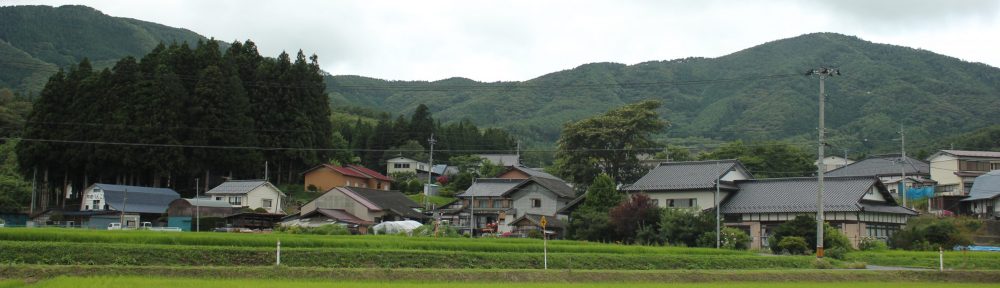
One such initiative is the Shiro Oni Artist-in-Residence (AIR), founded in 2013 by American artist Kjell Hahn in the former town of Onishi (now part of Fujioka City, in Gunma Prefecture). Hahn first came to Japan through the JET Programme in 2002, later returning to study ceramics and cycle around the country. During this time, he was introduced to Tokyo-born multimedia artist Chiaki Horikoshi, who had built a traditional anagama kiln in a mountain in Saitama, right on the border of OnishiDue to his playful and experimental approach to firing in a primitive Japanese kiln (the history of the anagama kiln dates back to 5th-century Japan, but its recent revival in Japan and beyond has strong ties to the counterculture of the 1960s), Horikoshi’s “kiln parties” became gathering places for artists, students, and people seeking an alternative lifestyle; some eventually moved to Onishi, as Kjell did.

Copyright © Liliana Morais, 2024
After Horikoshi’s death, Hahn took charge of the firings in the anagama, which has now been repurposed for the Shiro Oni AIR. Although the program accepts artists working in any media (priority is given to those who can work with the local community), there are two sessions specifically for firing ceramics in the anagama kiln, and demand has been growing every year. The process, which involves close attention to the rhythms of the fire and feeding it on the clock, takes a total of five days, making it a necessarily collective activity. Artists take shifts on the site, while locals come to help, chopping wood, preparing food, driving the artists up to the kiln site (located in a mountain forest otherwise only accessible by hiking), or simply providing company during the long nights and days.
Several Shiro Oni artists return for a second or even third residency, forming deep and lasting bonds with local residents that often continue well beyond their stay – and in a few cases, even lead them to relocate to the region. Through the Shiro Oni AIR and the Kanna Art Festival (established in 2014), Onishi has come to be known as an “art town”, drawing not only visitors from Tokyo and neighboring cities but also domestic in-migrants who contribute to the revitalization of the community by opening new businesses. Together, they have fostered what Tanaka (2017) describes as a “relationship population” (kankei jinkō): individuals who sustain ongoing ties to a rural place through repeated visits, regular engagement, and continued support.

Copyright © Liliana Morais, 2024
Shiro Oni is one of the case studies in my comparative research on the formation of cosmopolitan craft communities in Portugal, Brazil, and Japan. All cases revolve around Japanese-style wood-firing, a subculture defined by collective effort, experimentation, and a DIY ethos. Although the project is ongoing, the example of Onishi – and others like it – suggests a possible path for rural futures in Japan and beyond: the emergence of fluid, open communities that bring together people from diverse cultural backgrounds around shared acts of craft making that engage with the locality.
While such small-scale initiatives may not be able to halt depopulation (kasoka) or prevent the eventual disappearance (shōmetsu) of some rural settlements, they may transform how decline unfolds. Rather than being defined solely by loss, these projects can nurture new forms of conviviality that render rural degrowth – at least for a time – lively (nigiyaka) rather than desolate.
References:
Benson, M., & O’Reilly, K. (2009). Migration and the search for a better way of life: A critical exploration of lifestyle migration. The Sociological Review 57 (4), 608–625.
Mainichi Shinbun, “American Artist’s Studio Connects Foreigners to Traditional Crafts in Small Town Japan,” Mainichi Japan (July 2, 2021), accessed October 3, 2025, https://mainichi.jp/english/articles/20210701/p2a/00m/0na/023000c.
Morais, L. (2021) From Japan to Brazil: The Ceramics of Shoko Suzuki,” Garland Magazine, August 30, 2021, https://garlandmag.com/article/kogei-between-japan-and-brazil-the-ceramics-of-shoko-suzuki/. garlandmag.com
Morais, L. (2025). Craft as a Tool for Individual and Collective Empowerment: A Japanese Woman Ceramicist in a Rural Brazilian Town. In D. Wood (ed.) The Politics of Global Craft. Bloomsbury (forthcoming).
“Shiro Oni Artist in Residence,” Shiro Oni Studio, accessed October 3, 2025, https://shirooni.com.
Odagiri, T. (2024). Nigiyakana kaso o tsukuru: Nōson saisei no seisaku kōsō [Creating Vibrant Depopulation: Policy Concepts for Rural Regeneration]. Nōsan gyoson bunka kyōkai.
Tanaka T. (2017). Kankei jinkō wo tsukuru: teijū de mo kōryū de mo nai rōkaruinobēshon [Creating a related population: local innovation, not settlement or exchange]. Kirakusha.
Liliana Morais (Ph.D.) is a Specially Appointed Associate Professor in the Faculty of Sociology at Rikkyo University. Her research explores the intersections of craft, transnational migration, and, more recently, rural revitalization, with a focus on Japan from a transnational perspective, based on ethnography and oral history. Before Japan, she was based in Brazil, where curated the exhibition From Japan to Brazil: The Journey of Oriental Ceramics (2012) and published the book Cunha Ceramics: 40 Years of Noborigama Kiln in Brazil (2016, in Portuguese). More recently, she has published articles on the uses of craft for regional revitalization in Japan (“Spicing Up a 150-Year-Old Porcelain Factory: Art, Localism and Transnationalism in Arita’s Happy Lucky Kiln”, 2020), Portugal (“Entangled Ruralities: Remaking a Portuguese Mountain Hamlet Through Craft and Translocalism”, 2025) and Brazil (“Craft as a tool for individual and collective empowerment: a Japanese woman ceramicist in a rural Brazilian town”, forthcoming by Bloomsbury). She is a contributing writer for Garland Magazine and a board member of the Knowledge House for Craft.