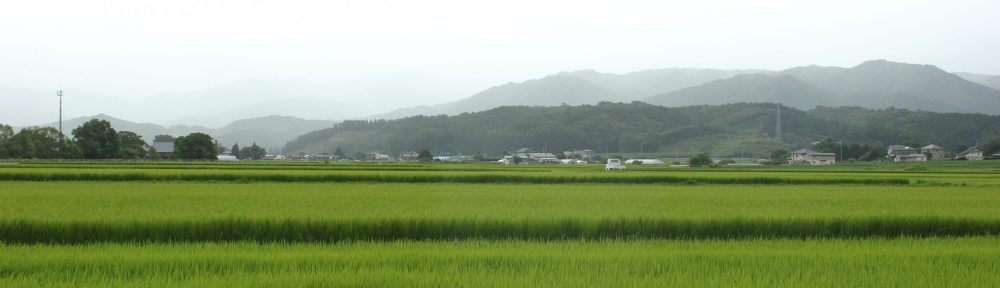
by Kaeko Chiba
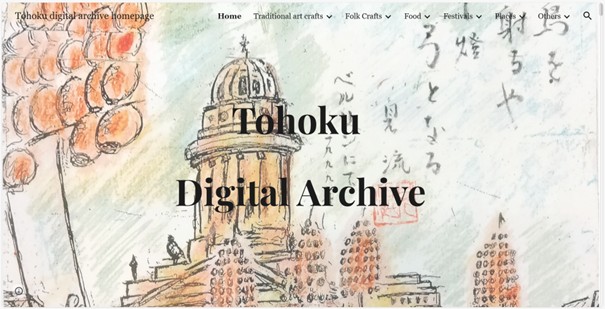
Step into a world where everyday rituals, local dialects, and the untold stories of rural Japan are preserved, celebrated, and brought to life. Welcome to the Tohoku Digital Archives, a groundbreaking project designed to safeguard the rapidly disappearing folk culture of northeastern Japan, beginning in Akita Prefecture: Tohoku digital archive homepage
Copyright © Kaeko Chiba 2024
Akita Prefecture, nestled in the scenic Tohoku region, faces a profound demographic challenge: it has the lowest birth rate and the highest aging population in all of Japan, with 38.5% of its total population over 65 years old. As young people migrate to metropolitan areas like Tokyo and Sendai, local folk culture—the festivals, crafts, language, and rituals that define daily life—is increasingly at risk of being forgotten. Younger residents often comment that their hometown has “nothing (nani-mo-nai),” feeling disconnected from their heritage. While many existing digital archives in Japan prioritize “high culture” (like Noh, Kabuki, or Ukiyo-e), less attention is paid to the informal expressive culture experienced in small groups—the folk culture that is the backbone of communities like Akita. Our project specifically addresses this gap, focusing on the everyday practices and beliefs of local community. The Tohoku Digital Archives is not just a repository of images; it is a participatory platform built on a philosophy of direct voices and collaborative creation.
Copyright © Sakiko Inoue 2025
The archive prioritizes the direct voices of local residents—the informants—over external interpretation. This is crucial in a region where different generations and groups often hold diverse, even conflicting, interpretations of their own traditions. One example is the the Kanto Festival. While some older participants adhere to the traditional belief that women should not touch the Kanto pole, fearing misfortune, younger voices are questioning the practice in the face of dwindling participation. By presenting these divergent accounts side-by-side, the archive promotes a more balanced power dynamic between researcher and research participants or between older and younger generations. The archive is also a means of empowerment. Including first-hand narratives, often accompanied by the informant’s name and picture (with consent), is a practice designed to foster a sense of identity and pride in their culture, mirroring the successful approach of institutions like the National Ainu Museum in Hokkaido.
The archive is actively created by undergraduate students from courses on gender and Japanese society. This participatory process encourages students to conduct interviews and analysis, fostering a sense of community contribution and helping them discover the value in their “forgotten” hometown. The long-term goal is to develop an educational model for elementary and high school students that uses the digital archives to improve English language acquisition and promote well-being by fostering local pride and identity. The Tohoku Digital Archives is an evolving project that seeks to move beyond traditional, static preservation. By embracing diverse voices and participatory methods, we aim to build a dynamic, inclusive system that not only preserves the cultural past of Tohoku but also shapes its future. Please visit our website and explore Tohoku Culture!
Kaeko Chiba is an Associate Professor of International Liberal Arts at Akita International University and an anthropologist specializing in Japanese culture, with a focus on class, gender, and traditional arts like the Tea Ceremony and Ikebana. Her research currently centers on the Tohoku Digital Archives to utilize participatory and methods for digitally preserving endangered folk culture and local identity in rural Japan.